A city should let you stay
Introduction
You can spend an entire day in a modern city and still feel like you were mostly processed. Buy coffee. Move along. Book a slot. Scan a QR code. Leave when your time is up. There are people everywhere, but a lot of urban life now runs on a subtle clock. If you are not spending, commuting, or working, your presence starts to look unnecessary.
That is what makes the whole third-space conversation feel bigger than a design trend. Most people are not asking for some cinematic town square full of string lights and perfect civic life. They are asking for somewhere to be. Somewhere between home and work that does not demand a purchase every forty minutes. Somewhere you can sit, look up, run into familiar faces, maybe talk, maybe not, and not feel like you are overstaying your welcome.
I do not think the main problem is that people have forgotten how to socialize. I think we have built cities that keep translating social life into transactions. Community gets packaged as a membership, a subscription, a ticketed event, a cafe tab, a co working pass, a curated experience. Then we wonder why people say they feel isolated in places that are technically full of activity.
If we want more physical third spaces in a consumerist age, we have to get more precise about what has been lost and more practical about what ordinary people can do. The encouraging part is that the answer is probably less glamorous than people imagine. It is also cheaper.
What we are missing is permission
Modern cities do not always look empty. They look crowded, lit up, and active. That is partly why this problem gets missed. There are venues everywhere. There are chairs. There are storefronts. There are common areas with tasteful plants and security guards. On paper it can look like abundance.
But a lot of that abundance comes with terms and conditions. You can enter, but not linger too long. You can sit, but only if you order. You can gather, but preferably in a way that is tidy, profitable, and easy to supervise. Access and welcome are not the same thing.
That difference matters more than it first seems. A real third space is not just a place with tables in it. It is a place where people have permission to be a little unfinished. You can show up alone, awkward, tired, broke, badly dressed, early, late, or just in no mood to perform, and you still belong there. A lot of supposedly public urban life no longer offers that. It offers conditional hospitality.
That condition hits some people harder than others. Teenagers get pushed out because they are seen as trouble before they have done anything. Older people lose places to sit without having to buy something. People in cramped homes lose somewhere to stretch their day. Lower income residents lose the places where social life can happen without draining money. Loneliness starts to look less like a mysterious emotional crisis and more like a very practical spatial one.
A third space is mostly a social rule
It is easy to imagine the fix in architectural terms. More benches. More plazas. More parks. More community centers. Sure. All of that helps. But bricks are only part of it. A third space works because of the unwritten rule inside it: you are allowed to be here without justifying yourself.
That rule matters because so much of modern life feels performative now. Even leisure arrives with homework. Build your network. Optimize your hobbies. Monetize your skills. Join the workshop. Use the app. Track the habit. There is always some faint pressure to turn free time into progress.
Third spaces interrupt that logic. They let people be regulars instead of projects. That sounds small. It is not. A lot of trust is built through repeated, low stakes contact. You keep seeing the same person at the same library table, or the same uncle on the same park bench, or the same parent waiting near the playground. You nod. Then one day you talk. Then a place starts to feel less anonymous.
That is why some very polished spaces still feel dead. They may be expensive, stylish, well branded, and completely useless as third spaces because the mood says: order, post, leave. Meanwhile a plain reading room or a row of plastic chairs outside a neighborhood shop can feel alive if nobody is rushing you out. The feeling of welcome does a lot more work than urban design people sometimes want to admit.
The internet filled one gap, not all of them
Yes, online spaces matter. They help people find communities they could never find locally. They make niche interests possible. They help lonely people feel less stranded. I would not dismiss any of that.
But digital connection did not replace what physical third spaces do. It replaced something else. Online, most of us meet under controlled conditions. Shared interests. Chosen identities. Muted notifications. Exit anytime. Physical space is rougher than that. You share noise. You wait your turn. You notice who looks tired. You end up around people you did not personally select.
That is not a bug. It is part of the point. Cities need more than affinity groups. They need overlap. They need places where different kinds of people can keep encountering one another without every encounter being intense, ideological, or commercial. A healthy civic life depends on lots of boring, repeated, low pressure coexistence.
I think we underestimate how much social resilience comes from that kind of mundane contact. Not close friendship. Not perfect unity. Just repeated familiarity. The person who watches your bag for two minutes. The woman who remembers your face from last week. The group of kids who know the chessboard is open to anyone. That texture is hard to digitize because it depends on bodies, timing, habit, and being slightly inconvenienced by other people in manageable ways.
We already have more raw material than we think
This is where the problem gets less depressing. If the only answer were “build a whole new city,” ordinary people would have very little leverage. But that is not the only answer. Most cities already contain underused spaces that could work much harder as third spaces if someone gave them a rhythm.
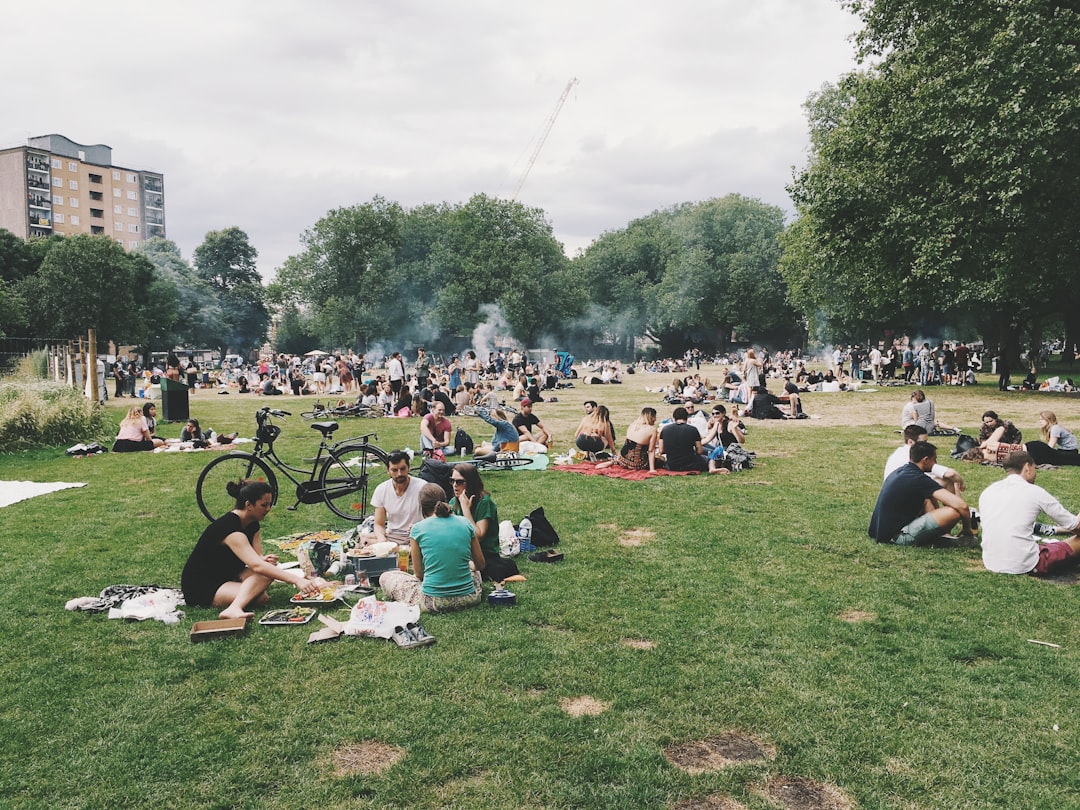
Libraries are the obvious example, but not the only one. School grounds after hours. Housing society rooms. Community halls. Temple or church courtyards. Parks that empty out after children leave. Wide footpaths near local shops. A vacant corner of a market during off hours. Even a laundry place can become social if the rules allow people to remain there without being treated like idle obstacles.
Usually the real shortage is not infrastructure. It is coordination. Who asks for permission? Who opens the room? Who brings folding chairs the first three times? Who says, gently, that this gathering is free and nobody has to buy anything? These are humble questions. They are also the whole game.
We have been trained to think solutions must be big, novel, and scalable. But local sociability is often built in a much less impressive way. One room. One recurring hour. One lightweight activity so people are not forced into instant intimacy. A reading table. A repair corner. A weekly tea setup. A community puzzle. A bench with shade and a habit around it. The city does not always need a reinvention. Sometimes it needs permission and repetition.
If you want accessible, reduce friction
This is the part people often get wrong while meaning well. They say a space is open to everyone, but the actual experience says otherwise. You need to register. You need to know someone. You need to show up exactly on time. You need to understand the cultural codes. You need confidence. You need money for snacks, transport, or the obligatory purchase that nobody calls obligatory.
An accessible third space is not one that sounds inclusive in theory. It is one that feels easy to enter when you are tired, shy, broke, or new. That means the practical details matter more than the manifesto.
No purchase required. Drop in friendly. Close to where people already are. Seating that does not punish older bodies. Shade if it is outdoors. Water if possible. A time people can remember. A format loose enough that silence is allowed. A reason to come that does not demand expertise.
That last point matters. People do not always need a program. Sometimes they just need an excuse. “Every Saturday, tea and mending in the park.” “Every Wednesday evening, open reading room.” “First Sunday of the month, chess and board games near the library.” These formats work because they lower the emotional cost of arrival. You are not walking into a room and wondering what your personality is supposed to do there.
And honestly, designing for lingering matters more than people admit. Plenty of civic efforts are built around attendance. Count heads. Run the activity. Clear the area. That misses the part where most of the actual social value happens before or after the formal thing. Someone stays to chat. A passerby stops next week because they saw people sitting there last time. A child tags along and starts treating the place as familiar. That is the beginning of a public.
Small, repeatable things beat big, impressive ones
If I had to reduce the practical lesson to one shift, it would be this: stop thinking only in terms of events. Think in terms of micro institutions.
A one off event can be nice. It can even be moving. But it usually does not change the social fabric of a neighbourhood because it does not become reliable. What changes a place is the moment people start assuming something will happen there again. The room will be open next Thursday. The tea table will be there on Sunday. The chairs will come out at six.
That kind of predictability is underrated. It tells people they do not have to catch lightning in a bottle. They can come back when life is less chaotic. That matters a lot for ordinary people, because ordinary life is messy. Childcare falls through. Work runs late. Energy disappears. A recurring space forgives that. It does not punish you for having a real life.
This is why I would rather see ten folding chairs appear every week than one brilliantly branded community festival. Start smaller than your ambition. Rotate responsibility so nobody burns out. Keep the norms simple. Make room for people who mostly want to watch. If money enters the picture, keep it quiet and optional. The door should never feel like a checkout counter.
There is a political angle here too. Elinor Ostrom wrote about how ordinary people manage shared resources when the rules are local and clear. A tiny third space works in a similar way. It needs light stewardship. Who unlocks the room? Who cleans up? What happens if one clique tries to dominate it? None of that is glamorous. It is just what keeps a shared thing from collapsing.
We need to defend the right to be somewhere without buying something
That is really what this comes down to. Not romance. Not nostalgia. Not some fantasy of village life returning to the city. Just a basic argument about what urban space is for.
Right now, a lot of cities behave as if every square foot should generate revenue, movement, or measurable output. Free presence starts to look suspicious. Loitering becomes a problem. Benches shrink. Seating disappears. Security expands. Public toilets vanish. Even the language gets weird. We talk about “activating” spaces when what we often mean is filling them with businesses so nobody can occupy them for free.
That logic is not neutral. It creates a city that is efficient for transactions and thin on care. It tells people that if they want to belong somewhere, they should be prepared to pay repeatedly. And then we act surprised when public trust erodes and everybody retreats into private worlds, algorithmic feeds, and paid memberships.
Ordinary people cannot solve all of that by themselves. City governments still matter. Libraries need funding. Schoolyards should open after hours. Permits for small neighbourhood gatherings should be easier. Parks need seats, shade, toilets, and maintenance. None of that is optional if we are serious.
Still, people can do more than they think. You do not need to rescue the whole city. You need one accessible place, one recurring time, one social permission slip. Start with what already exists. Make it easy to join. Make it cheap enough to last. Keep showing up. Invite the people most likely to assume the invitation is not meant for them.
That is how a third space begins. Not with a glossy concept note. Usually with someone deciding that a city should have at least one place where a person can arrive with no plan, not much money, and no need to explain themselves.
What would our cities feel like if we treated the right to linger for free as something basic, not a perk?