Why Do We Desire to Travel?
Why Do We Travel?
There comes a time in every life when the air inside the room grows too familiar to breathe.
The walls begin to echo the sound of your own thoughts, and even the sunlight looks rehearsed, falling in the same rhythm, tracing the same dust motes.
You don’t hate the place.
You simply begin to sense its limitations.
You know, without quite knowing how, that you’ve seen everything this silence has to offer.
And then something stirs inside, some void beneath your heart begins to hum.
A longing not for beauty, nor for escape, but for ‘expansion’.
The desire to travel begins there, not as a plan or an itinerary, but as a tremor of consciousness.
We don’t long for destinations.
We long for edges, the places where we can feel ourselves stretch against the fabric of existence.
The Pulse Beneath The Skin
To travel is to remember that you are not static.
You are not a tree fixed in the ground by its roots.
You are like the winds, rivers and the seas, never meant to stay still.
Even when the body is confined, the imaginations roam, across memories, across long-forgotten smells of unfamiliar lands, across landscapes that may exist or not, but you feel like they should.
Some say we travel to learn, to see, to grow. But that’s a half-truth.
We travel because we ache to be incomplete. To live, even briefly, in a state of becoming.
Where every street feels like a possibility and every stranger a mirror.
Movement breaks the illusion of permanence.
It reminds us that life is ever-moving, that the world in its essence, is motion pretending to be still.
The Myth of Elsewhere
We romanticize “elsewhere” as if geography could cure despair.
We imagine that joy must exist in some other climate, that meaning waits for us at the edge of another city’s skyline.
But travel rarely grants new meaning; it reveals the meanings we have hidden from ourselves.
There is a strange humility that comes from standing in a place where no one knows your name.
You stop performing. You stop narrating. You simply are.
And perhaps that’s enough.
You realize how much of your identity is made of repetitions; how often you mistake your surroundings for yourself.
The streets you walk, the tea you drink, the conversations that orbit the same unspoken sorrows.
The moment you step away, you see how paper-thin your patterns really are.
Maybe that’s why travellers often speak of ‘feeling alive’ in new places.
It’s not novelty that stirs them.
It’s the disillusionment, the sudden awareness that world is not enough to hold their contradictions.
The Inner Geography
Every journey is a translation of the psyche.
The cities we love mirror our inner landscapes. The routes we take reveal the maps of our longing.
There are those who seek mountains, who crave stillness, altitude, the whisper of solitude.
They are often the ones who have carried noise within them for so long.
There are those who crave the sea, the rhythmic repetitions, the rolling forgiveness of the tides.
They are the ones who have been too rigid, too contained.
And then there are those who are drawn to cities, to the pulsing anonymity, the language of neon and footsteps.
They are often the ones fear their own silence.
To travel is to confess what you lack.
To stand before a landscape that embodies what you have forgotten within yourself.
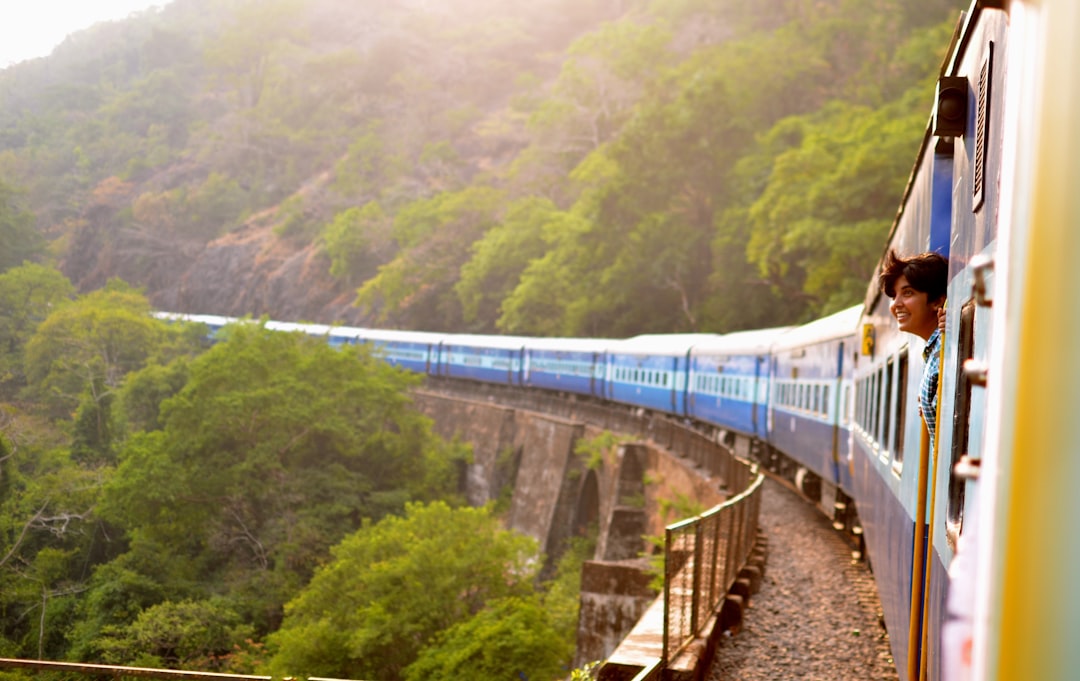
There was once a child who looked at the hills and saw freedom, the way mist touched tea leaves, the toy train covering through rain-soaked forests, the smell of cardamom and petrol.
He didn’t know it then, but he was learning the language of impermanence.
He was learning that every beautiful thing is a passing movement, and yet, that passing does not make it any less real.
That is the secret pulse of travel, impermanence that does not wound, change that does not threaten.
The Self In Transit
In transit, identity looses its grip. You stop being your past.
You stop being what people expect. You become a gaze, a presence, a quiet observer of existence.
The stranger sitting beside you on the train doesn’t know your failures.
The wind doesn’t care how often you doubted yourself.
In movement, you are forgiven by anonymity.
That’s why the most profound moments of travel are not about what you see but what you unsee.
The dissolving of definitions, The softening of ‘I’.
You stand on a shamshan ghat and watch the endless fires devour the night.
You breathe in the scent of wood and sandal. You feel both small and infinite.
You realize that to be alive is to be constantly burning and being reborn.
You realize that road is not leading anywhere, it is simply teaching you how to walk.
Movement is a meditation when done with awareness.
Each journey teaches you something about how to inhabit time, how to accept the transience of everything that once seemed permanent.
The Return
Every journey ends with a return.
But the home you return to is never the same. Or maybe its you who has shaped yourself.
You enter the same room, and yet, the silence feels different.
The light seems softer. You see the ordinary with new reverence.
You realize that travel never truly ends, it continues within you, as a rearranged way of seeing.
People often say, “I wish I could stay there forever”. But if you did, the magic would fade.
The awe depends on distance. You are meant to arrive and depart, to love and release.
That’s how meaning breathes.
And perhaps, that’s why the best travellers are never escapists.
They are returners, those who carry the world’s vastness back into the smallest corners of their lives.
The Still Journey
Not all travel needs motion.
Some journeys unfold in the mind, while reading, while dreaming, while remembering.
The act of imagining another place is itself a form of travel. It rearranges your sense of the possible.
The ones who cannot move, by circumstance, by pain, by duty, are often the greatest travellers in spirit.
Their inner landscapes are rich with unvisited worlds.
They learn to find depth in stillness, and motion in thought.
Perhaps the truest journey is not across lands, but across layers of consciousness.
To descend into your own silence and discover that it too, is vast.
The Eternal Thirst
We desire to travel because something in us refuses finality.
Because no matter how much we love home, we know we are finished yet.
The heart aches for renewal the way earth aches for rain.
Travel in its deepest sense, is not about escape or discovery, its about remembering the motion of being alive.
To be human is to wonder, to question, to desire newness even when surrounded by comfort.
The bird doesn’t apologise for its restlessness, nor should you.
Maybe that’s what it means to be alive, to be alive, to be a pilgrim of your own becoming.
To keep walking, even through doubt, until movement itself becomes a prayer.
You may cross countries or never leave your town.
You may move through silence, through grief, through memory.
But so long as you keep searching for new ways, you are still travelling.
Because travel is not a departure from life.
IT IS LIFE, disguised as movement, as longing, as you.